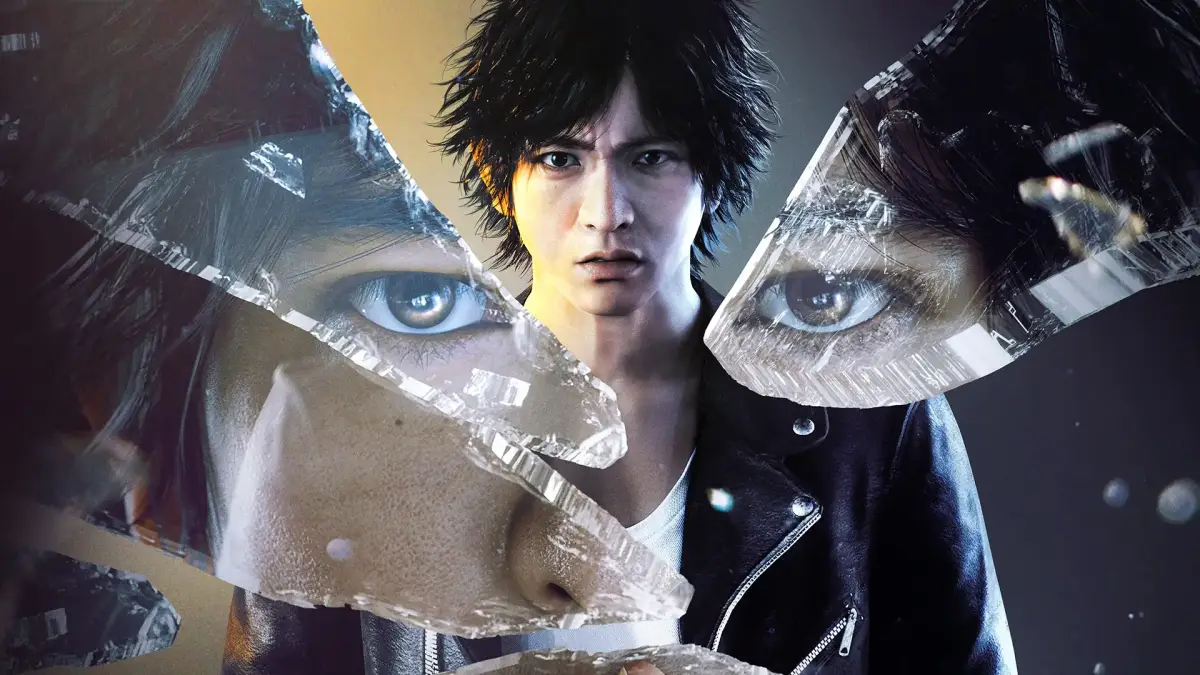
Welcome to Kamurocho, detective. Judgment drops you into a sprawling open-world RPG where you'll step into the shoes of Takayuki Yagami, a lawyer turned private investigator. You'll be diving deep into crime scenes, tailing suspects, engaging in high-octane brawls, and chasing down leads across the vibrant, dangerous streets of Tokyo. It’s a game about unraveling mysteries, both personal and criminal, with a focus on investigation and intense, stylish combat.
This guide is here to help you navigate the complexities of Yagami's investigations and ensure you don't miss a thing. We'll cover everything from mastering the investigative mechanics and combat systems to tracking down every collectible and achieving all the Steam Achievements. If you're aiming for that 100% completion or just want to make sure you don't miss any crucial side cases, this is the place to be.
Notes on Missable Trophies
Don't miss out on trophies in Judgment! This guide breaks down missable achievements by chapter, from finding cats to acing casino challenges and court cases.
Hey there! So, you're diving into Judgment and want to snag all those sweet trophies? Awesome! Some of them are tied to specific story moments, and if you miss 'em, you'll have to replay a chunk of the game. No worries, though – I've got your back. This section breaks down all the missable trophies by chapter, so you can keep an eye out without spoiling too much of the main story.
All Chapters - Cat Finder: This one's super important and pops up throughout the game. Whenever you're in a first-person 'Active Search' mode during the main story, keep your ears peeled for a little 'meow.' That's your cue to find a cat! There's a full list of their locations elsewhere, but just remember to look around whenever you hear that sound.
Chapter 2 - Casino Chips: So, you'll hit up a casino for the first time in Chapter 2. They'll give you 300 chips to start. Here's the trick: before you do anything else, save your game. Then, play your best to rack up over 600 chips. If you lose it all, you can just reload that save and try again!
Chapter 5 - Flashback Investigation: During a flashback sequence in this chapter, you'll be investigating a patient's room. While you're in the 'Active Search' mode here, make sure you check out the nurse – specifically, her face, chest, and rear end. Get thorough!
Chapter 7 - Entertaining a Customer: This one involves playing as a female character and entertaining a customer. You'll need to pick the right dialogue options. Here are the exact phrases you need to use to get the trophy:
- "My name is Saori"
- "Were you asleep?"
- Give Mika a Sign
- Get Close to Him
Chapter 8 - Gambling Password: Before you can enter a gambling establishment in this chapter, you'll be asked for a password. You need to get all three parts correct on your first try. The correct answers are:
- "Three times"
- "Can I talk to Moon?"
- "Chateaubriand, blue"
Chapter 12 - Timed Takedown: In this chapter, you'll explore an abandoned building, and someone you're with gets captured. Once you find them, a three-minute timer starts. Don't rush to beat up the bad guys immediately! Instead, wait until there are only about ten seconds left on the clock before you finish them off.
Finale - Court Case Evidence: In the very last court case of the game, you'll have to present evidence. This is the fourth time you'll be asked to present something during this specific case. Make sure you present the 'Hamura and Ichinose's Missing Link' evidence. Get that right, and you'll get the trophy!
That's it! Just keep these in mind as you play through the story, and you'll snag these trophies without any extra grinding. Good luck!
Basic Controls
Learn the essential controls for Judgment on PlayStation and Xbox. Master movement, combat, and menu navigation with this comprehensive guide.
This guide details the basic controls for Judgment, covering exploration, menu navigation, and combat for both PlayStation and Xbox controllers. More specific combat information can be found in the Combat and Abilities section.
| Exploration Controls | PlayStation | Xbox | Control |
|---|---|---|---|
| Move your character | Left Stick | ||
| Move the camera | Right Stick | ||
| Interact Hold down to sprint | X / A | ||
| Center camera behind you | R3 | ||
| Enter first-person mode | L3 | ||
| View map | Touchpad / View Button | ||
| Enter Pause Menu | Options / Menu Button | ||
| Use items assigned to shortcuts | D-Pad Up/Down |
| Menu Controls | PlayStation | Xbox | Control |
|---|---|---|---|
| Move cursor | Left Stick | ||
| Confirm Use on Items screen | X / A | ||
| Cancel/Exit | Circle / B | ||
| Discard on Items screen | Square / X | ||
| Used in some menus to toggle screens | L1 / LB or R1 / RB | ||
| Exit Menu | Options / Menu Button |
| Combat Controls (typical) | PlayStation | Xbox | Control |
|---|---|---|---|
| Move your character | Left Stick | ||
| Move the camera | Right Stick | ||
| Weak Attack Rush Combo | Square / X | ||
| Strong Attack Finishing Blow EX Action | Triangle / Y | ||
| Hold down to sprint Quickstep (while holding Fighting Stance button) | X / A | ||
| Grab Enemy or Weapon Throw Enemy or Weapon | Circle / B | ||
| Guard Change Grab while holding someone | L1 / LB | ||
| Fighting Stance | L2 / LT | ||
| Center Camera Hold to negate EX Actions | R3 | ||
| EX Boost Mode | R1 / RB | ||
| Switch fighting style | D-Pad Left/Right | ||
| Use items assigned to shortcuts | D-Pad Up/Down | ||
| Taunt | D-Pad Down | ||
| Enter Pause Menu | Options / Menu Button |
FAQ
Find answers to frequently asked questions about Judgment, including gameplay differences from Yakuza, saving, DLC, and how to grind SP and money.
Q: What is _Judgment_?
A: _Judgment_ is a 2018 action RPG game by SEGA's Ryu Ga Gotoku Studio. It was released in 2018 for the PlayStation 4 in Japan and in 2019 for the PlayStation 4 in other territories. A Remaster was then released in 2021 for the PlayStation 5, Xbox Series, and Google Stadia.
Q: Is this a Yakuza game?
A: Yes, and no. This game takes place in Kamurocho, the setting of the _Yakuza_ series. Controls, combat, minigames, and the general feel are all vintage _Yakuza_. _Judgment_ has no direct story connection to any of the _Yakuza_ games. It is an entirely standalone story spin-off.
Q: Is this is a good game to start the _Yakuza_ series with?
A: This is the perfect game to try if you're looking to see if you'd get into the _Yakuza_ series. _Judgment_ is its own self-contained story, so there is no previous knowledge required in order to understand what's going on in the game.
Q: How do I save in this game?
A: Go to the Pause Menu and select "Save". You can also enable autosave at the beginning of the game, which saves the game regularly in a separate slot.
Q: What is different in _Judgment_ compared to the _Yakuza_ games?
A: Here's a list of new things you can expect to encounter:
- The obvious one is that you are playing as an ostensibly law-abiding Japanese citizen instead of a former yakuza, so the entire focus and perspective of the game is different.
- There's a considerable amount of gameplay focused around investigation and being a detective, including searching, tailing people, chasing people, picking locks, flying a drone around, and others.
- Apart from appearing during battles, weapons are not something that can be bought or carried around in the game. Also, the game doesn't have armor-based equipment.
- Minigames have been changed around. There are a lot of options in the Arcade, and there's heavy emphasis on Drone flying and VR entertainment.
Q: What is this game rated?
A: This game is rated "M" for Mature by the ESRB. It includes the content descriptors of: Blood, Intense Violence, Partial Nudity, Sexual Content, Strong Language, and Use of Alcohol. In this game, you enter the seemy underbelly of metropolitan Japan, which includes a lot of illegal stuff. The combat in this game can be brutal, especially the "EX Actions" you perform in combat, but while blood sprays out a lot, it's never too overt. There is implied gore in this game, but it's never actually shown on camera.
Q: Who do I play as in this game?
A: In this game, you play as new character Takayuki Yagami, a former defense attorney currently working as a private investigator in Kamurocho.
Q: I downloaded some DLC. Where do I pick it up?
A: Just outside the Yagami Detective Agency is a post box. Any DLC and rewards will be placed there to be picked up.
Q: What changes are there from the PS4 version of the game to the 2021 remaster?
A: Apart from graphical updates and reduced loading times, the remaster is _almost_ the same as the original _except_ for a few changed minigames. No I don't know why they made these changes.
- The Pinball machine in Yagami's office has been replaced with an Out Run machine.
- In the Club SEGA on Nakamichi St., the Puyo Puyo machines have been replaced with Virtua Fighter 2.
Q: What's an easy way to grind SP?
A: If you're hurting for SP, the best way is to use Quickstarter and fund the Hug Bomb track until you fund "Hug Bomb Omega". Each of these energy drinks will give you 770 SP, and they cost 140,000 yen apiece. If you're serious about dumping money into this, you'll need a source of cash, so....
Q: What's an easy way to grind money?
A: The clearest and most obvious way is through Paradise VR. The Long Challenge course, if used properly, can net a few million per trip. It does require Precision Press so you can slow the die roll and pick your number, and a little bit of skill to actually get that number. Hit all the King Koro-nyans you can. Each of those battles get you at least 100,000 yen, and if you're brave, hit Kuro-nyan after you get a lot of items so you can get double back when you steal your stuff back.
Glossary of Terms
Navigate the world of Judgment by understanding key terms like Aniki, Bento, Cabaret Clubs, Captain, Family, Gokudo, and Honorifics. Your essential glossary guide.
This guide explains terms you'll encounter in the subtitles and dialogue of Judgment, clarifying their translations and cultural context.
- "Aniki"
- Literally "big brother." In Japanese culture, younger siblings use this term for older brothers. Within the yakuza and business worlds, "aniki" refers to a mentor figure one follows to learn from. Yagami initially refers to Kaito as his "old aniki.".
- Bento
- A boxed lunch, typically prepared in rectangular containers with a base of rice or noodles, accompanied by meat and vegetables. Bento can be purchased from convenience stores or prepared at home.
- Cabaret Clubs and Host Clubs
- Cabaret clubs, also known as "hostess clubs," originated from Japanese bars where hostesses entertained guests. Modern cabaret clubs, like "The Grand" in Sotenbori, are large establishments with stage acts and numerous hostesses who provide company, pour drinks, and engage in conversation with customers. The role can sometimes verge on sex work, officially falling under the "water trade." Host clubs are a counterpart where women pay for male companionship.
- Captain
- In yakuza terminology, this is the "wakagashira," the second-in-command of a yakuza family. The captain is one step away from leading the family. Kyohei Hamura is the captain of the Matsugane Family, often referred to as "kashira.".
- Family
- A yakuza organization, known as "-kai" or "-gumi," led by a patriarch. Families can focus on specific businesses or control territories, varying in size and influence. Smaller families may operate discreetly if they maintain their position.
- "Gokudo"
- Literally meaning "the ultimate path," this term is commonly used to refer to "gangsters" or yakuza members themselves. When characters use "gokudo," they often express a favorable or honorable view of their organization.
- Honorifics
- Japanese honorifics are more complex than Western titles like "Mister." They are attached to names to denote hierarchy and politeness. In Judgment, men are often referred to by their family names (e.g., Yagami) and women by their given names (e.g., Saori). Omitting an honorific implies extreme closeness or intentional rudeness.
- -bo: A colloquial term for "boy," used like a nickname. Kaito calls Yagami "Ta-bo," localized as "Tak," signifying their close friendship.
- -chan: A diminutive honorific, often used by adults for children, similar to "My dear" or "Little." Girls may continue using it into adulthood, while boys typically transition to "-kun."
- -kun: Another diminutive honorific, used for familiar individuals, by seniors addressing juniors, and among boys.
- -san: The most common honorific, analogous to "Mr." or "Mrs.," used for politeness with unfamiliar people.
- -sensei: Typically means "teacher," but also applies to lawyers, doctors, and politicians. Yagami uses it for lawyers like Shintani and Genda.
- -senpai: Refers to a senior at work or school. The opposite is "kohai" (junior).
Similar guides you might like






100% Human-Written. Community Verified. Learn how Ludo.guide verifies content