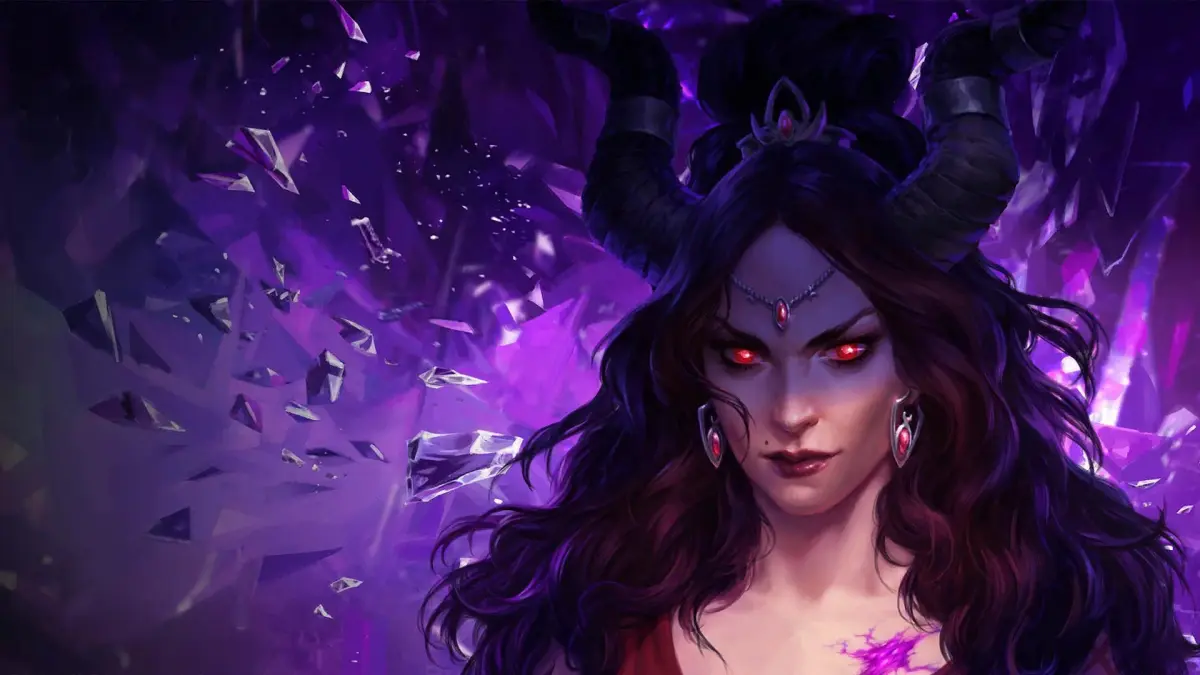
Pathfinder: Wrath of the Righteous is a sprawling single-player RPG where you navigate the treacherous Worldwound, a land consumed by demonic invasion. You'll build your character, manage a full-blown crusade, and make critical decisions that shape the fate of the land. From the initial skirmishes in Gray Garrison to the epic battles in Drezen, you'll face challenging encounters and uncover a deep, story-rich fantasy world.
This guide is your companion through the chaos. We'll help you master character creation, optimize your party composition, and equip yourselves for the toughest fights. Whether you're aiming to conquer every challenge, understand the intricacies of the crusade management system, or simply survive the horrors of Iz, we've got you covered.
Rules
Understand turns, attack bonus, and Armor Class (AC) in Pathfinder: Wrath of the Righteous. Learn about actions like move, standard, full-round, swift, and free actions.
- 1Understand creature turns: Each turn has a move action (move your full distance, up to 30' for most, or take other move-specified actions; moving 5' doesn't consume the move action) and a standard action (make one weapon attack or cast most spells; or take other standard-specified actions). You can choose to take a second move action instead of a standard action.
- 2Lean on full-round actions: If you do not move, you can take a full-round action to make multiple weapon attacks (if able) or cast a spell requiring a full-round action (like most summoning spells), or take other full-round specified actions.
- 3Use swift actions: Certain abilities, like casting a quickened spell, require a swift action. You can only perform one swift action per turn, but it doesn't prevent a full-round action.
- 4Perform free actions: Abilities like a Barbarian's Rage are free actions, taking no time, and you can perform as many as you like per turn.
- 5Calculate Attack Bonus (AB): Roll 1d20 and add your AB. AB is determined by Base Attack Bonus (BAB) (0 to +20 for a 20th level Fighter), plus modifiers from Strength (+1 per 2 points above 10 for melee), Dexterity (replaces Strength for ranged/certain weapons with Weapon Finesse), flanking (+2), enchantment bonuses (e.g., +1 weapon), feats (e.g., Greater Weapon Focus), morale bonuses (e.g., Potion of Heroism), and other bonuses (luck, competence).
- 6Check against Armor Class (AC): If the modified 1d20 roll is greater than or equal to the opponent's AC, you hit. A roll of 1 is always a miss, and a 20 is always a hit (potentially a critical hit).
- 7Understand AC sources: AC includes Base (10), Dodge bonuses (from attributes like Dexterity and feats), Size (+1 for gnomes/halflings), Armor (light, medium, heavy), Shields (or shield AC from feats), Natural bonuses (e.g., Snakeskin), Deflection bonuses (e.g., Ring of Protection), and penalties from negative statuses (e.g., cowering). Most bonuses of the same type do not stack, except for dodge AC from different sources.
- 8Differentiate AC types: Full AC includes all bonuses. Touch AC excludes armor and shields. Flat-footed AC excludes dodge bonuses.
- 9Be aware of AC vulnerabilities: Losing initiative can lead to being flat-footed, losing all dodge bonuses. Touch attacks bypass armor and shields.
- 10Consider concealment: Spells like Blur, Mirror Image, and Displacement can provide concealment to avoid being hit.
- 11Flanking: When two creatures attack the same opponent, the opponent is flanked, granting attackers +2 to attack rolls. This increases to +4 with the Outflank teamwork feat. Ranged characters cannot flank.
- 12Sneak Attacks: Characters dealing sneak damage can apply bonus damage to enemies who are flanked, flat-footed, or denied their Dexterity bonus to AC. Ranged attackers can only deal additional sneak damage to enemies flanked by two or more melee attackers.
- 13Charging: If you are 10' or more away with a clear path and no difficult terrain, you can make a charge attack as a full-round action, gaining a single attack at full AB +2.
- 14Calculate damage: Damage is modified by the wielder's Strength bonus (or Dexterity with appropriate feats).
- Losing initiative can make you vulnerable by removing dodge bonuses. Consider feats like Improved Initiative or abilities like Uncanny Dodge.
- Be mindful of touch attacks, which bypass heavy armor.
- Flanking provides a significant attack bonus, especially when combined with the Outflank feat.
- Sneak attacks are a potent source of extra damage, particularly against unaware or flanked enemies.
- Charge attacks offer a bonus to hit, useful for closing the distance and initiating combat.
Tips
Master Pathfinder: Wrath of the Righteous with essential tips on turn-based combat, saving, inventory management, and character creation.
- Use turn-based combat instead of real-time with pause (RTWP) for Pathfinder: Wrath of the Righteous's complex mechanics; toggle with the ↑ button.
- Do not depend on autosaves as they are volatile; use regular saves and quicksaves instead. Quicksave before resting, after resting, and after applying do-or-die buffs.
- Quicksave before leaving or entering an area, or when bringing up the Crusade Management screen, as these are common crash points.
- After a boss fight, loot enemies immediately before doing anything else, as loot can vanish if you quicksave and reload.
- Junk items bloat your save file and increase load times. Drop junk items in random encounter maps or on the world map, being careful not to drop essential quest items.
- Sell items to a single vendor (e.g., Wilcer Garms the quartermaster) so you know who to buy back quest items from if accidentally sold.
- You can fast travel to your headquarters from anywhere in Drezen via the resting interface, regaining control in your personal chambers without needing to rest.
- When entering the world map, use the resting interface and assign the character with the highest Stealth skill to the "Camouflage" slot to avoid random encounters via a successful Stealth check.
- Valuables can be safely sold as there are no quests in Pathfinder: Wrath of the Righteous that require them, unlike in Kingmaker.
Character Creation Tips:
- Your companions provide good ranged attackers (Lann, Wenduag, Arueshalae), casters (Ember, Nenio), and a healer (Daeran). Focus your main character on upfront offense and survivability, as companions are lacking here. A martial character or a caster with an animal companion (Druid, Nature Oracle, Sylvan Sorcerer) is recommended. Pure casters may find early levels challenging.
- Avoid creating a main character who is redundant with companions. For example, your main character can only be marginally better than Arueshalae as an archer. Consider unique roles like Primalist Bloodrager or Vivisectionist Alchemist.
- Ensure your party covers all skills, including Use Magic Device. Nenio covers knowledge skills, and Arueshalae covers others. Your main character should excel in at least two skills. Companions do not manage Lore (Religion) well, and Athletics and Mobility coverage can be shaky if Lann is not recruited early.
- Do not underestimate feats, abilities, and gear that increase initiative, as going first can be the most powerful advantage.
- Recommended main character classes include Vivisectionist (Alchemist), Instinctual Warrior or Mad Dog (Barbarian), Primalist (Bloodrager), Crusader (Cleric), Mutation Warrior (Fighter), Kineticist, Drunken Master or Sohei (Monk), Sword Saint (Magus), Seeker (Oracle), Tortured Crusader (Paladin), Demonslayer or Sable Company Marine (Ranger), Shadow Shaman, Feyform Shifter, Skald or Inciter, Arcane Enforcer or Spawn Slayer (Slayer), Sylvan Sorcerer, and Specialist Diviner or Exploiter Wizard. Some of these classes are gated behind DLC (downloadable content — extra missions or items released after launch). The base Fighter class is balanced, versatile, and lethal.
- When multiclassing, be careful when leveling up; the default selection is the class with the most levels, which may not be the class you intend to level.
Mythic Path Tips:
- Mythic Paths are chosen at the end of Chapter 2 and add replay value with unique interactions and quests. Factor in path synergies when planning your leveling. For example, the Angel path synergizes with full divine casters.
- No mythic path is initially alignment-locked, but associated alignments exist. At rank 3, your character's alignment will be forced to conform to the path's alignment if it is not within one step.
Character Creation
Understand character leveling in Pathfinder: Wrath of the Righteous, including XP requirements and the level cap of 20.
Your character level in Pathfinder: Wrath of the Righteous is independent of your class level, as you can select multiple classes. To increase your character level, you need experience points (XP). You gain XP by defeating enemies, completing quests, and deploying your skills. The maximum character level you can achieve is 20.
XP Requirements per Character Level:
- Level 2: 2,000 XP
- Level 3: 5,000 XP
- Level 4: 9,000 XP
- Level 5: 15,000 XP
- Level 6: 23,000 XP
- Level 7: 35,000 XP
- Level 8: 51,000 XP
- Level 9: 75,000 XP
- Level 10: 105,000 XP
- Level 11: 155,000 XP
- Level 12: 220,000 XP
- Level 13: 315,000 XP
- Level 14: 445,000 XP
- Level 15: 635,000 XP
- Level 16: 890,000 XP
- Level 17: 1,300,000 XP
- Level 18: 1,800,000 XP
- Level 19: 2,550,000 XP
- Level 20: 3,600,000 XP
Race
Explore race choices in Pathfinder: Wrath of the Righteous, detailing attribute modifiers, racial traits, and exclusive archetypes like Human, Elf, Dwarf, and Gnome.
- 1Understand that most races besides Human have one or two subtypes.
- 2Note that Aasimar, Tiefling, and Dhampir races require an additional Heritage choice due to their mixed or vampiric ancestry.
- 3Consider the Human race for its adaptability, offering a +2 to any ability modifier, a bonus feat at 1st level, and +1 skill point per level, making them suitable for any role. Their exclusive archetype is the Imitator (Slayer).
- 4Choose Elf for bonuses to Dexterity and Intelligence (+2 each, -2 Constitution), Keen Senses (+2 Perception), Elven Magic (+2 caster level checks vs. spell resistance, +2 Knowledge (Arcana)), Elven Immunities (immune to sleep, +2 saves vs. Enchantment), and Elven Weapon Familiarity (proficient with longbows, longswords, rapiers, composite shortbows; Elven Curve Blade treated as martial). Their exclusive archetype is the Spell Dancer (Magus).
- 5Consider Elf (Blightborn) for the same base Elf stats but with added bonuses: +2 vs. Necromancy and curse spells/spell-like abilities, and +1 attack vs. outsiders with the demon subtype.
- 6Consider Elf (Loremaster) for the same base Elf stats but with added bonuses: +2 to Knowledge (Arcana) and Use Magic Device skill checks.
- 7Choose Dwarf for bonuses to Constitution and Wisdom (+2 each, -2 Charisma), with a base speed of 20' (Slow and Steady), +4 to Combat Maneuver Defense vs. bull rush/trip (Stability), +2 racial bonus on saves vs. poison and spells (Hardy), +4 dodge bonus to AC vs. giants (Defensive Training - Giants), +1 attack bonus vs. Orcs and Goblinoids (Hatred), +2 Perception (Keen Senses), and Dwarven Weapon Familiarity (proficient with battleaxes, heavy picks, warhammers; Dwarven Urgrosh and Dwarven Waraxe treated as martial). Their exclusive archetype is the Stonelord (Paladin).
- 8Consider Barrow Dwarf for the same base Dwarf stats but with added bonuses: +1 attack and +1 dodge AC vs. undead, and +2 Lore (Religion) skill checks.
- 9Consider Unstoppable Dwarf for the same base Dwarf stats but with added bonuses: the Endurance feat and +1 racial bonus to Fortitude saving throws, in addition to the Hatred - Orcs and Goblinoids trait.
- 10Choose Gnome for bonuses to Constitution and Charisma (+2 each, -2 Strength), Keen Senses (+2 Perception), +1 attack bonus vs. Reptilian Humanoids and Goblinoids (Hatred - Reptilian Humanoids), +4 dodge bonus to AC vs. giants (Defensive Training - Giants), +2 racial save bonus vs. illusion spells (Illusion Resistance), +1 to DC of illusion spells cast (Gnome Magic), +2 Knowledge (World) checks (Obsessive), and a base speed of 20' (Slow Movement). Their exclusive archetype is the Phantasmal Mage (Arcanist).
- Elves trade flexibility for fixed bonuses, making them suitable for spellcasters and characters benefiting from specific weapon proficiencies.
- Dwarves' attribute bonuses make them excellent Clerics and Monks, and decent Inquisitors and Druids, though the Charisma penalty can be a drawback for a main character.
- Gnomes' Strength penalty is a notable drawback.
Similar guides you might like




100% Human-Written. Community Verified. Learn how Ludo.guide verifies content