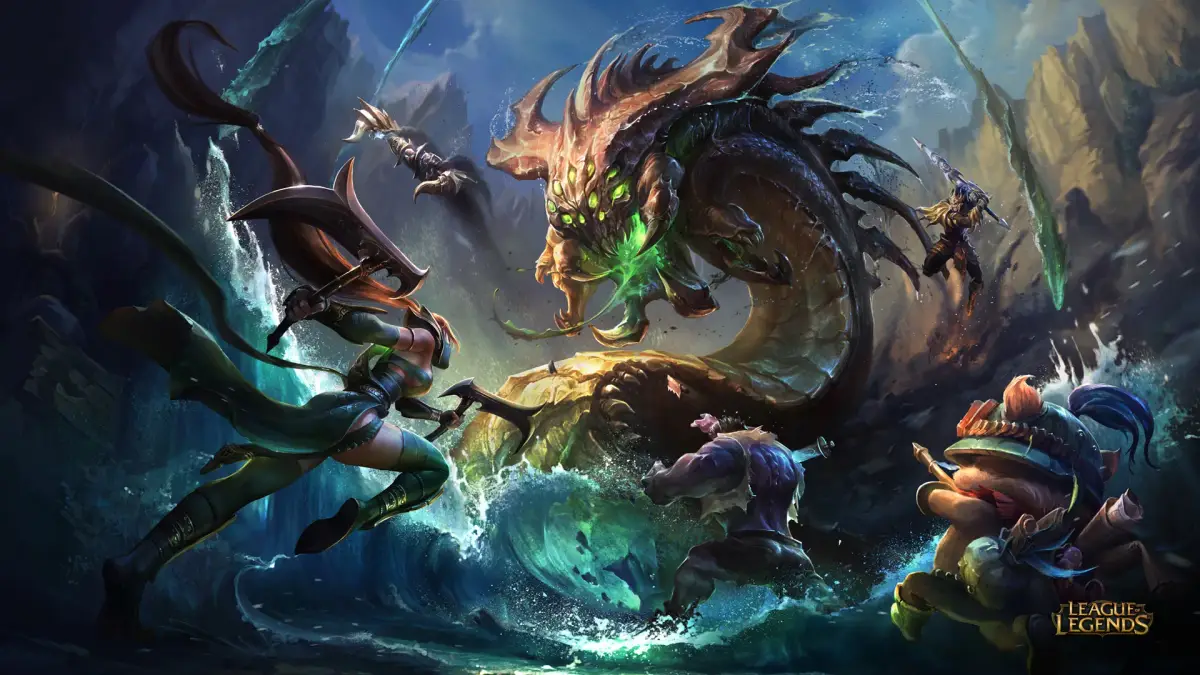
Welcome to the Rift! League of Legends is a 5v5 MOBA where you and your team battle to destroy the enemy Nexus. You'll pick a champion with unique abilities, last hit minions for gold, and coordinate with your team to secure crucial objectives like dragons and Baron Nashor. It's a deep, strategic game that rewards teamwork and quick thinking.
This guide will help you master the core mechanics of League of Legends. We'll cover essential strategies for laning, jungle warfare, and team fighting. You'll learn how to effectively secure objectives, improve your last hitting, and understand champion mastery to climb the ranks and achieve victory.
Part 2
Explore the career of Andre the Giant in League of Legends Part 2, covering his feuds, championships, and eventual retirement from professional wrestling.
This section details the later career and life of Andre the Giant, including his feuds, championship runs, and eventual retirement. It also touches upon other notable wrestlers and their careers.
Andre the Giant's Later Career:
Andre the Giant's career continued with significant moments after his initial rise. He was involved in a match where the belt was locked in a safe, remaining there to this day. In 1986, Andre took time off from the WWF for a movie role and to rest his back. He returned under a mask as part of 'The Machines' before officially returning in January 1987 to challenge Hulk Hogan. Following Wrestlemania III, Andre had a rematch with Hulk Hogan, winning on a fluke and immediately presenting the belt to the Million Dollar Man. Andre's last official match was on December 4, 1992, in Japan's All Japan Pro Wrestling circuit, teaming with Giant Baba and Rusher Kimura against Haruka Eigen, Motoshi Okuma, and Masa Fuchi.
In 1989, Andre formed the Colossal Connection with Haku, becoming Tag Team Champions. They lost the belts to Demolition at Wrestlemania VI in 1990. After this match, a frustrated Bobby Heenan berated Andre, leading Andre to attack both Heenan and Haku. Andre then officially retired from the WWF.
Andre's health deteriorated significantly due to his size, with Bobby Heenan noting Andre's difficulty in even climbing stairs. In 1993, at the age of 46, Andre passed away in his sleep from heart failure after attending his father's funeral.
Other Wrestlers' Careers:
Andy Kaufman: The comedian and actor known for 'Saturday Night Live' and 'Taxi' proclaimed himself the Intergender Champion and challenged women. Jerry Lawler stepped in, leading to a match where Kaufman ended up in a neck brace. Kaufman died of lung cancer in 1984 at age 35.
Bam Bam Bigelow: Bigelow started in the WWF as a face in 1985, feuding with wrestlers like Jerry Lawler and King Kong Bundy. He returned in 1993 as a heel, with his loss to Lawrence Taylor at Wrestlemania XI solidifying this. He later teamed with Tatanka, losing the Tag Team Championship to the 1-2-3 Kid and Marty Jannetty at the 1995 Royal Rumble. After leaving the WWF, he held the ECW World Title. In 2000, he saved three children from a fire, suffering burns but making a comeback. He currently wrestles in independent promotions.
Baron von Raschke: A former amateur wrestling and football champion, Raschke debuted as a heel in 1966, feuding with the von Erich dynasty using his Claw hold. Managed by Bobby Heenan, he was a prominent heel and held various championships before retiring in 1991 to become a substitute teacher.
Big John Studd: Studd began as one of the Masked Executioners, winning Tag Team Championships in 1976. He feuded with champions like Bob Backlund and Hulk Hogan but never won a singles title. Under Bobby Heenan, he issued a Body Slam Challenge, which Andre the Giant famously met at Wrestlemania I. He later formed a tag team with Hacksaw Jim Duggan. Studd retired in the late 1980s and passed away from liver cancer in 1995 at age 45.
Part 3
League of Legends Part 3 covers Bob Backlund's 1993 Royal Rumble record and Bret Hart's championship history. Learn key details.
Bob Backlund
Bob Backlund became a prominent face in the WWWF. In 1978, he won the WWF Championship from "Superstar" Billy Graham, holding it for five years. In 1983, he lost the title to the Iron Sheik when Mr. Skaaland threw in the towel during the Camel Clutch. Backlund made a surprise return before the 1993 Royal Rumble, entering at #2 and setting a record by staying in the match for over one hour and two minutes, ultimately being eliminated by Yokozuna. He was the third-to-last competitor. Following this, he became a heel and aimed to restore wrestling's past glory. At the 1994 Survivor Series, he defeated Bret "Hitman" Hart in an "I Quit" match to win the WWF Championship again. Shortly after, Backlund set another record by losing the WWF title to Diesel in just 8 seconds, the shortest WWF title match in history. He retired from wrestling and pursued a political career, running for Congress in Connecticut in 2000 and campaigning for President in 2004.
Bobby "the Brain" Heenan
Bobby Heenan is widely regarded as one of the greatest managers in professional wrestling. After wrestling in the early 1960s, he found his calling in managing, becoming a highly disliked figure known for using various cheating tactics to elevate his clients. At Wrestlemania V, he held the foot of the Ultimate Warrior, allowing Ravishing Rick Rude to win the WWF Intercontinental Championship. In 1989, he formed the Colossal Connection with Haku and Andre the Giant, leading them to Tag Team gold. Heenan also managed Mr. Perfect, leading him to the Intercontinental Championship twice. In late 1991, Heenan joined Gorilla Monsoon at the commentator's table, forming a memorable broadcasting duo known for Heenan's snide remarks and Monsoon's reactions.
Bret "Hitman" Hart
Bret Hart began his career in the mid-1980s with his partner Jim "the Anvil" Neidhart as the Hart Foundation. They initially were disliked, but this changed at Wrestlemania IV when Bad News Brown turned on Bret during a battle royal. Bret destroyed the trophy presented to Bad News, which became a memorable moment for the Hart Foundation. They won the Tag Team Title twice, including from Demolition at the 1990 Summerslam. Their second reign ended at Wrestlemania VII against the Nasty Boys, after which Jim Neidhart split. Bret continued in singles competition, winning the Intercontinental Championship twice: first from Mr. Perfect at the 1991 Summerslam, and second from Rowdy Roddy Piper at Wrestlemania VIII. He lost this title to British Bulldog Davey Boy Smith but then defeated Ric Flair for the WWF Championship, becoming the first superstar to achieve the "Triple Crown" (holding all three major titles). He lost his title to Yokozuna at Wrestlemania IX, regained it at Wrestlemania X with Roddy Piper as special guest referee, lost it to Diesel, and eventually won it back. In February 1997, at the first In Your House event, he won a 4-man over-the-top-rope match for his fourth title, losing it to Sid soon after. His fifth and final WWF title loss was in a controversial match to Shawn Michaels in 1997, after which he moved to WCW. There, he won the WCW World Championship 7 times before retiring from wrestling in 2000 due to a concussion. His 24-year career and motto "I'm the best there is, the best there was, and the best there ever will be" are highly regarded.
Brian Pillman (R.I.P.)
Brian Pillman trained under Stu Hart and began wrestling in his promotion in 1987. He joined the NWA in 1989, teaming with Tom Zenk to win the US Tag Titles from the Fabulous Freebirds. Moving to WCW, he defeated Scotty Flamingo on October 27, 1991, to win the WCW World Light Heavyweight Championship. After losing this title, he formed the Hollywood Blondes tag team with "Incredible" Steve Austin, capturing WCW Tag Team gold. Following a stint in ECW, Pillman joined the WWF. Before the 1997 WWF PPV Badd Blood, Pillman's body was found in his locker room; he had died of heart disease at age 35.
"British Bulldog" Davey Boy Smith (R.I.P.)
Born in the UK, Davey Boy Smith began wrestling at a young age. He started his career in Japan with his cousin, the Dynamite Kid. They later moved to Calgary and then to the WWF. At Wrestlemania II in 1986, they defeated Greg Valentine and Brutus Beefcake to win the WWF Tag Team titles. The team was known for its speed, agility, and power. Serious injuries forced the Dynamite Kid to retire early, leading Davey Boy to pursue a singles career. He was a popular wrestler, though the text notes he was later made a heel. At Summerslam 1992, he captured the Intercontinental title from his opponent.
- Pay close attention to the specific years and events mentioned for each wrestler to understand their career progression.
- Note the championship reigns and title changes, as these are key historical points.
- Remember the specific opponents and match types mentioned, such as "I Quit" matches and record-setting Royal Rumble performances.
Part 4
Learn about wrestling legends like Bruno Sammartino and Captain Lou Albano in League of Legends Part 4. Discover their championship wins and careers.
Bruno Sammartino
Bruno Sammartino, known as the "Italian Strongman," began wrestling in 1959 and won his first championship in 1963. He held the world title twice, with his first reign lasting an incredible seven years and his second lasting four years. He was a dominant and popular wrestler in the Northeastern US throughout the 1960s, feuding with top heels like Killer Kowalski and "Superstar" Billy Graham. After retiring from full-time wrestling, he managed his son David.
Captain Lou Albano
Captain Lou Albano, a highly impactful manager, started as a wrestler in the late 1950s. He and his partner Tony Altimore, known as the Sicilians, captured the Midwest Tag Team title on June 30, 1961, and the US Tag Team Championship on July 10, 1967. Around 1970, Albano transitioned to managing, aiming to take the WWWF title from Bruno Sammartino. He managed wrestlers like Freddie Blassie, Crusher Verdu, Prof. Toru Tanaka, and Ivan Koloff, succeeding with Koloff in 1971. By the late 1970s, he shifted his focus to Bob Backlund, eventually becoming a beloved manager and a significant force in popularizing the WWF. He also appeared on MTV and was inducted into the WWF Hall of Fame in 1996.
"Cowboy" Bob Orton
Bob Orton wrestled for over three decades, starting in amateur promotions at age 9. He trained with wrestlers like Hiro Matsuda, Jack Brisco, and Eddie Graham. After 20 years on the road in Southeast promotions, he joined the WWF and played a role in the main event of the first-ever Wrestlemania by assisting Roddy Piper and Paul Orndorff. His career highlight was wrestling in the opening match at Wrestlemania III in front of 93,000 fans.
David von Erich (R.I.P.)
David von Erich turned professional in the NWA's Texas Territory in 1978, winning the Texas Territory Heavyweight Championship that same year. He also teamed with his brother Kevin to win the NWA Texas Tag Team title and the American Tag Team titles in 1978. David won the Texas title five more times, along with the NWA Southern Heavyweight Championship, the North American Tag Team belts with Dory Funk Jr., the Florida TV title, the Missouri Heavyweight Championship, and the NWA World Tag Team title with Kevin. David tragically died of a drug overdose in Japan on February 10, 1984, at the age of 25.
Don Muraco
Don Muraco debuted in the NWA's Florida territory in 1979. His first title was the NWA Florida Heavyweight Championship in 1980, defeating Manny Fernandez. Managed by Captain Lou Albano in the WWF, Muraco won the Intercontinental belt on June 20, 1981, from Pedro Morales, losing it five months later. He returned a year later, regained the IC Championship from Morales, and then lost the belt to Tito Santana in February 1984. After parting with Albano, he was managed by Mr. Fuji and later Superstar Billy Graham. Muraco then competed in Stu Hart's Stampede Wrestling, winning the North American Heavyweight Championship before losing it to the British Bulldog. He later appeared in ECW, defeating Jimmy Snuka for the ECW World Heavyweight title, but was beaten by Tito Santana.
Dory Funk Jr.
Dory Funk Jr. wrestled in independent promotions while still in school. On January 7, 1966, he defeated "Big Thunder" Gene Kiniski for the NWA World Championship, holding the belt for 7 years before losing it to Harley Race in 1973. He also wrestled in promotions like the AWA, WWWF, and All Japan. At Wrestlemania II, he partnered with his brother Terry against the Junk Yard Dog and Tito Santana. He currently resides in Florida, teaching Japanese, doing financial counseling, and training aspiring wrestlers.
- Pay attention to the specific dates and championship reigns mentioned for each wrestler.
- Note the different managers associated with wrestlers like Don Muraco and Captain Lou Albano.
- The text highlights significant feuds and rivalries, such as Bruno Sammartino vs. Killer Kowalski.
Part 5
Learn about wrestlers like Fritz von Erich, Eddie Guerrero, and George "the Animal" Steele in Part 5 of the League of Legends wrestling guide.
Fritz von Erich (R.I.P.)
Fritz began his wrestling career in the NWA promotions. During his time there he held the US Heavyweight title 3 times, the NWA Texas Heavyweight title 3 times, the NWA American Heavyweight Championship 13 times and the NWA World Heavyweight title 2 times. When a dispute over Fritz arose among NWA promoters, Fritz left and formed his own promotion, the World Class Championship Wrestling (WCCW). He searched for stars to wrestle and called upon his 6 sons. He nurtured them all to stardom. Unfortunately, his oldest son Jack (R.I.P.) died at an early age. His other 5 sons became huge draws in Texas and all was fine until David (R.I.P.) died in 1984 while touring in Japan. Three years later, in 1987, Michael (R.I.P.) passed away. In 1991, Chris (R.I.P.) died. And the most famous of the von Erichs, Kerry (R.I.P. Texas Tornado), died in 1993. Kevin was, and still is, the only remaining family member. Through all of this, Fritz did what he could to continue on. He died lonely and depressed at his ranch in Texas on September 10, 1997.
~Dynamite Kid~
The Dynamite Kid is part of one of the most successful tag teams in the WWF. His partner was Davey Boy Smith (R.I.P.), and they were under the name of the British Bulldogs. They were a young team, and at Wrestlemania II, with the help of his partner, the Dynamite Kid captured Tag Team gold from the then-Dream Team of Greg Valentine and Brutus Beefcake. There were countless matches between themselves and foliages of Bobby Heenan. The Dynamite Kid left the WWF somewhere around the year 1990 after realizing that 15 years of wrestling had done serious damage to his body, while Davey Boy Smith continued to wrestle in singles competition. He is now living in his native England.
~Eddie Guerrero~
Eddie Guerrero began his wrestling career in 1987 at the age of 19, wrestling in Mexico and Japan before beginning his career in the USA. Eddie is one of the most hated heels in the business and is able to provoke outrage from his fans at the slightest provocation. He is still wrestling today, and his outstanding conditioning and mat skills prove that he is still a force to be reckoned with, and will continue to be for many years to come.
~George "the Animal" Steele~
A lot of people have always wondered how Steele earned his reputation for chewing on turnbuckles (a hearty afternoon snack). Here's how. At the end of one of his matches while wrestling in a promotion in Pittsburg, one of the fans through a pillow into the ring for him to do whatever with. Steele is quoted as saying "There's three things you can do with a pillow. Sit on it, throw it back, or tear it up." Needles to say, Steele tore up the pillow with his teeth and the crowd went crazy. This began of his tradition of "eating" turnbuckles after every match. Right after Wrestlemania I Steele took a liking to Macho Man Randy Savage's girlfriend, Miss Elizabeth, and a year-long feud erupted with its climax occurring at Wrestlemania II when Savage defended his Intercontinental belt against Steele. Unfortunately, Steele lost the match. Steele never won many championships but he goes down as a legend for making wrestling truly fun to watch.
~Grand Wizard (R.I.P.)~
The Grand Wizard was one of the most successful managers in the business, but surprisingly never wrestled a day in his life. He was instantly recognizable with his trademark polyester suits, sunglasses, and turban, setting the fans wild. It was partly thanks to the Grand Wizard that, in the 1970s, "Superstar" Billy Graham was able to upset the current champion Bruno Sammartino. The Grand Wizard went on to manage such superstars as Greg Valentine, Killer Kowalski, and Don Muraco. His focus was primarily on Bob Backlund for taking the title from Billy Graham in 1978. In 1983, at the age of 54, the Grand Wizard died suddenly of a heart attack.
~Greg "the Hammer" Valentine~
Greg Valentine's career began when he was 19 and lasted 30 years. In 1978, with partner Ric Flair, he captured the NWA World Tag Team Championship from the Andersons. He moved to the WWF in the early 80s and captured the Intercontinental championship from Tito Santana in 1984 and the WWF Tag titles with Brutus Beefcake in 1985, only to lose them at Wrestlemania II to the British Bulldogs. He left the WWF for a short time in the mid-80s to wrestle in Japan, then returned to the states, but never found the same success as he had previously. He still wrestles in Canada's ICW today.
~"Hacksaw" Jim Duggan~
Jim Duggan was an amateur wrestling star in New York, a star football player at SMU, and played professional football for the Atlanta Falcons before beginning his notable wrestling career. Duggan was always a fan favorite, known for his chants of "Hoooo!" and "USA!," plus his trademark 2 x 4 and American flag. He held the championship title during his career, and feuded with Andre the Giant (R.I.P.), Harley Race, and the Iron Sheik. He even went on to win the 20-man elimination Royal Rumble match in 1988. (For reference, it didn't become 30-man, or broadcasted on PPV, until 1989.) In 1998, Duggan was diagnosed with cancer, and a tumor the size of a football was removed from his body. He recovered within a year and returned to the ring, and continues to please fans all across the nation.
One thing I never understood... even when Duggan wrestled in foreign countries, the fans chanted "USA!" right along with him, and still cheered him on. I guess Duggan just has that charisma about him.
~Harley Race~
Harley Race's career in the NWA is similar to that
Similar guides you might like


100% Human-Written. Community Verified. Learn how Ludo.guide verifies content