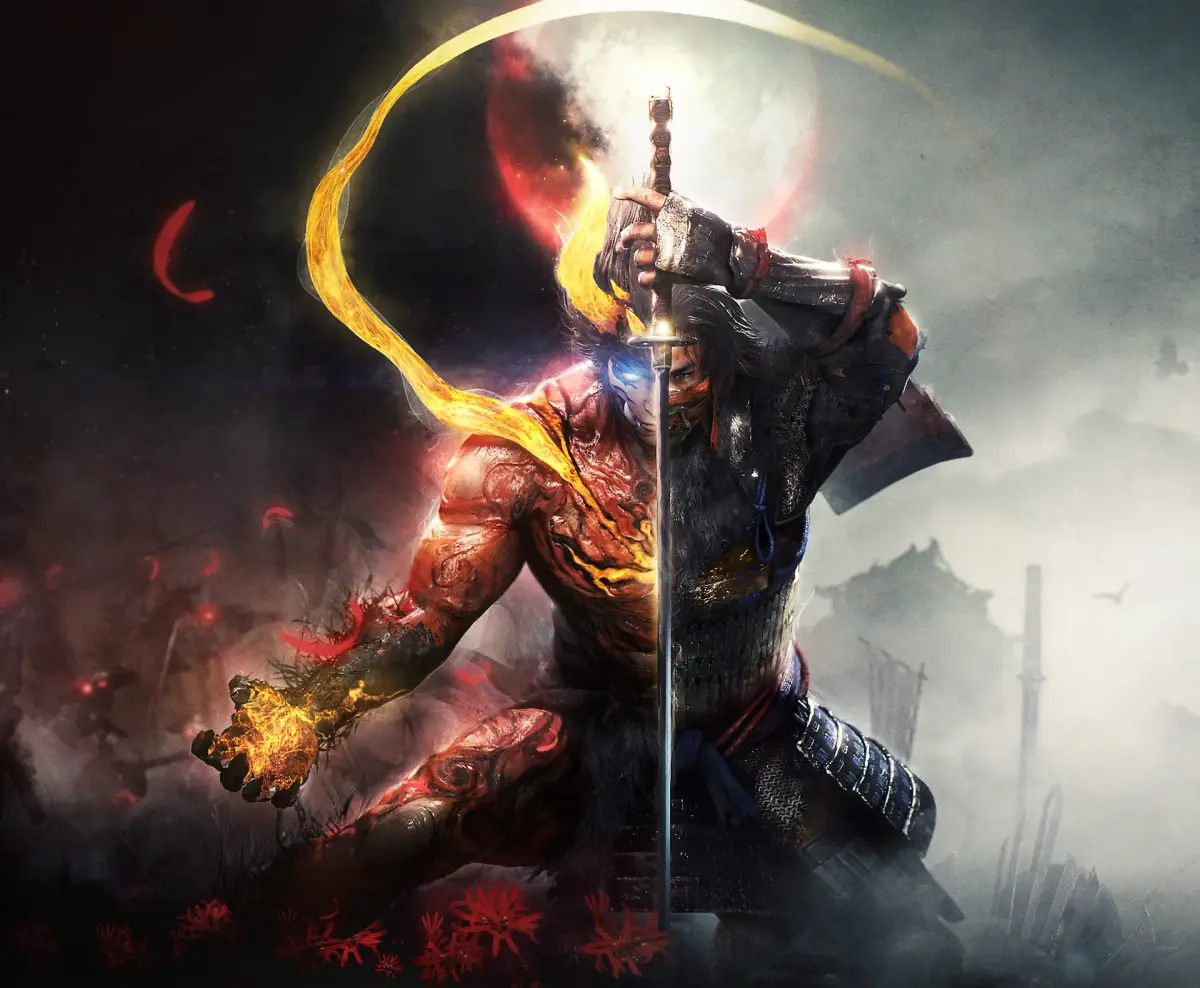
Nioh 2 throws you into the Sengoku period of Japan as a half-human, half-yokai warrior. You'll master deep samurai combat, wield powerful yokai abilities, and navigate treacherous missions, from the eerie Village of Cursed Blossoms to the depths of The Cavern Depths. It’s a challenging action RPG that demands precision and strategic use of your Ki.
This guide is here to help you conquer Nioh 2. We'll break down core mechanics, offer advanced strategies for tough bosses, and provide a clear path through every mission. Whether you're optimizing your build with specific weapons and armor or just trying to survive the onslaught, we've got your back.
Hub and overworld
Navigate Nioh 2's country map, unlock new regions like Awakening and Soaring, and understand Twilight Missions and post-game content.
Nioh 2 takes place across several key locations in Japan. Between story and side missions, you will access a large map screen where you can select your next mission. Initially, only the region Awakening is available, but more regions unlock as you clear main missions. Completing missions fills the map with main and side missions. You can also select unlocked Twilight Missions from red bubbles on the left, which become available after finishing your first region. You can save and change regions at any time.
Missions and Twilight Missions
Normal missions are divided into main and side missions. Side missions typically unlock after finishing a main mission, while main missions are story-related. Completing any mission for the first time yields unique rewards; subsequent completions offer lower rewards. Twilight Missions are higher difficulty missions based on main missions and longer side mission stages. Beating them provides better-than-normal rewards, and first-time rewards can be earned daily. Two Twilight Missions are available per day and change daily at twilight. Aside from first-time mission rewards, Twilight Missions are the only way to obtain quality umbracite.
Each region provides a "starting point" from which you can access useful facilities:
- The Hut
- Shrine
- Blacksmith (Unlocked after the second main mission)
- Dojo
- Hidden Teahouse (Unlocked in the 2nd region)
- Torii Gate (Online)
- The Interim (Unlocked in the 6th region)
Each region contains 25 Kodama (spirits) to collect across main and sub missions. Each region also has hidden items scattered throughout, which become available after finishing the main missions of that region. Finding these locations rewards various items and lore. Discovering 10 such locations grants a trophy.
Post Game/New Game+/Dream of the Strong Content
After defeating the final boss of the main story, you will unlock Dream of the Strong (DotS), a post-game replay of all missions with stronger enemies and slightly altered missions. Divine weapons will now drop in all missions, even normal ones. DotS missions feature new first-time clear rewards, including divine gear, smithing texts, locks, and valuable materials for the blacksmith. Additionally, in DotS missions, you can use up to 10 Ochoko cups (items used to summon help) when selecting a mission to increase divine drop rates. New Game+ (NG+) also offers much higher amrita (experience points) and gold gains throughout.
The first-time mission rewards in DotS are the only way, aside from forging, to obtain fabled umbracite and divine umbracite. However, not all regions are immediately unlocked in DotS; initially, only Awakening and Soaring are available. All missions within these regions are accessible. You can unlock more regions by clearing available missions; after reaching a certain number, Shadow will unlock, followed by the rest. Unlocking NG+ also enables new functions for the blacksmith and your Hut. In addition to the two daily Twilight Missions in normal maps, NG+ offers an additional two, providing four missions with daily completion rewards. Over time, you will also unlock several training missions that can be replayed for locks and other rewards, though they do not award new skills.
- Unlock new regions by completing main missions.
- Twilight Missions offer daily rewards and are essential for obtaining quality umbracite.
- The Blacksmith is unlocked after the second main mission, and the Hidden Teahouse in the second region.
- Dream of the Strong (NG+) significantly increases enemy difficulty and reward potential.
- Use Ochoko cups in Dream of the Strong to boost divine item drop rates.
Hut
Master the Hut in Nioh 2! Learn about changing appearance, managing your storehouse, saving builds, viewing illustrations, remodeling, and optimizing tea utensils for better drops.
Hey there! So, you've stumbled upon the Hut in Nioh 2, and it's way more than just a pretty room. Think of it as your personal hub for all sorts of handy management and customization. Let's break down what you can do here so you don't miss out on any of its perks.
Changing Your Appearance
This is where you can tweak your protagonist's look, essentially diving back into the character creator. You can change everything from their appearance to their gender and voice. Plus, you can save different looks as presets. There's also a 'transform' option that lets you swap your appearance with a character avatar you get from the tea house. This avatar will show up everywhere except in cutscenes, which is a neat little cosmetic trick.
Storehouse
Your item bag has a limit of 500 items (that's armor, weapons, and soul cores, but not consumables). The storehouse is your lifeline for keeping all the excess gear you don't want to sell, disassemble, or just drop. It's a lifesaver for managing soul cores especially. The storehouse can hold a massive 4000 items, so you've got plenty of room.
Manage Equipment Sets and Builds
This feature lets you save specific combinations of your equipped gear. It's super useful for quickly switching between different loadouts for various situations. The 'Builds' option, however, only unlocks after you defeat the final boss. Once unlocked, it lets you save not just your gear sets, but also your core stats, skills, skill customizations, and pretty much everything that defines your character's build. Keep in mind, switching between builds that have different core stats requires a Book of Reincarnation. You can buy these from the blacksmith for an ever-increasing amount of money (up to 1 million) or from the tea house using glory.
View Illustrations
This section is like your personal gallery. You can view information about Yokai, story characters, and your guardian spirits. It's also where you can rewatch any cutscenes you've already seen in the game.
Remodel Hut
Want to personalize your space? This is the place. You can change the overall look of the hut and add decorations like wall scrolls. You can also choose a 'visitation' option, which lets you select one of your guardian spirits to appear in the hut. It doesn't affect gameplay, but it's a nice touch.
Tea Utensil Placement
This is arguably one of the most important aspects of the Hut, right up there with Builds, the storehouse, and appearance. After a certain point in the second or third regions, you'll claim the hidden tea house. You can collect tea utensils from enemy drops or other sources. Some need to be appraised in the tea house first, but once done, you can place them here. You get a shelf with 4 slots for these utensils. Each tea utensil has three main stats: Splendor, Simplicity, and Eccentricity. Each stat boosts one of your attributes: Luck (for rarer drops), Money Acquired, and Tea Utensil Drop Rate, respectively. You can place 4 utensils at a time, and the order doesn't matter. The game offers a 'recommended placement' option, but I wouldn't use it. It balances the stats, which isn't efficient. The main goal here is to boost your drop rates, as the other two functions are already covered by other game mechanics. I highly recommend focusing solely on Splendor to maximize your Luck.
Hub and overworld (2)
Navigate Nioh 2's regions and country map. Learn about mission selection, twilight missions, and post-game content in Dream of the Strong.
Nioh 2 largely takes place in several key locations across Japan over the course of several years. In between story and side missions you will find yourself in a large map screen where you may select your next mission from the options visible on the map. At first you will only have access to the one region Awakening but more will unlock as you clear main missions.
As you do so the map of the region fills up with side missions and main missions. Here you can also select twilight missions (higher difficulty missions based on main missions and longer side mission stages) you have unlocked from the red bubbles on the left, however you must unlock them first and twilight missions will not unlock until after you finish your first region. You will also be able to save and change regions whenever you want.
Normal missions are divided into main and side missions, side missions typically unlock after finishing a main mission and main missions are story related. Completing any mission the first time yields rewards unique to the first time with lower rewards for 2nd onwards. Beating twilight missions will give you better than normal rewards and the first time rewards can be gotten daily. There are two twilight missions per day and they change every day at twilight. Twilight missions aside from first time mission rewards are the only way to get quality umbracite (a crafting material).
Each region gives you a "starting point". From where you can access various useful facilities:
- The Hut
- Shrine
- Blacksmith (Unlocked after second main mission)
- Dojo
- Hidden teahouse (Unlocked in 2nd region)
- Torii gate (Online)
- The interim (unlocked in 6th region)
Each region has 25 Kodama (spirits) to collect across main and sub missions. More on that in the Shrine section. Lastly each region has hidden items scattered across them (all of whom will be available once you finish main missions of the region). Finding these locations rewards various items and some lore. Finding 10 such locations gives a trophy.
Once you defeat the final boss of the main story you will unlock Dream of the Strong (DotS), a post-game replay of all missions, with stronger enemies and slightly altered missions. In Nioh 2's Dream of the Strong, Divine weapons will now drop in all missions even in the normal ones. DotS missions will have new first time clear rewards, including divine gear, smithing texts, locks, valuable materials for the blacksmith and so on. In addition, unique to DotS missions, when selecting a mission you can use up to 10 Ochoko cups (cups used to summon players) to increase divine drop rates for the mission. Ng+ (New Game Plus) will also have much higher amirita (experience points) and gold gains throughout. DotS first time missions rewards are the only way aside from forging to get fabled Umbracite and Divine umbracite.
However in DotS not all regions are immediately unlocked; at the start only Awakening and Soaring will be available at first. However all the missions within them will be available. You can unlock more regions simply by clearing the available missions; once you hit a certain number Shadow will unlock and eventually the rest. In addition unlocking ng+ will allow for a new functions to the blacksmith and to your Hut. Also just as the normal maps have 2 twilight missions daily, ng+ will have an additional 2 twilight missions, giving you four missions from which you can reap the benefits of daily completion rewards.
Over time you will also unlock several training missions which you can do again, though they won't award new unlocked skills they will give locks and other rewards better and different from before.
- Twilight missions offer better rewards and are the only way to obtain quality umbracite outside of forging.
- Completing missions for the first time yields the best rewards.
- Dream of the Strong increases enemy difficulty but offers significantly better loot and rewards, including Divine gear and materials.
- Use Ochoko cups in Dream of the Strong to boost divine item drop rates.
Hidden Teahouse and torii gate
Master Nioh 2's Hidden Teahouse and Torii Gate! Learn how to join clans, appraise utensils, farm glory, and engage in online play for powerful buffs and rewards.
Alright, let's talk about two really important spots in Nioh 2 that are key to getting stronger and playing with others: the Hidden Teahouse and the Torii Gate. Think of the Teahouse as your personal hub for all things clan-related and for managing those fancy tea utensils you'll be finding. The Torii Gate? That's your gateway to the online world, helping you farm glory and tackle missions with friends.
The Hidden Teahouse
So, the Hidden Teahouse might seem like it's just for online stuff, but trust me, it's super useful even when you're playing solo. This is where you'll bring all those tea utensils you've been picking up as loot. You can appraise them here, and if they're good quality, they'll get a nice spot in your hut. Just a heads-up, though: if you bring Hisahide low-quality stuff, he might just break it, so keep an eye on that!
This is also where you join a clan. Don't stress about picking the 'perfect' one right away – you can switch clans every 8 hours. Each clan offers a unique buff, and the strength of that buff depends on your rank within the clan and how much Glory you've earned overall. For instance, the Gamo clan can give you a nice luck boost, which is always handy for finding better gear.
You can check out clan battles and rankings here too. These are basically weekly competitions where players race to gather Glory. Glory is a special currency you'll earn through online play (more on that with the Torii Gate) and by defeating Revenants. Clan battles pit red and blue teams against each other, with the winners snagging some sweet prizes.
You can also donate items for Glory, and sometimes, donating specific items enough times will net you special rewards tied to certain clans. And speaking of trading, you can exchange Glory for all sorts of valuable stuff in the Teahouse. This includes useful normal items, rare Yokai materials, transformations (letting you change your appearance to characters like Tokichiro or Nobunaga), Masterpieces (which can give you a random weapon of a specific type, up to Exotic rarity), Sacred Treasures (similar to Masterpieces but only in NG+ and can yield Divine gear), emotes, and wall scrolls.
The Torii Gate and Online Play
Now, the Torii Gate is your direct line to Nioh 2's online features. Through it, you can jump into 'Random Encounters' or 'Expeditions'. Expeditions are basically extended campaigns where you'll tackle entire missions with up to three other players. These are fantastic for racking up Glory quickly. Random Encounters, on the other hand, are simpler – you just jump in to help a single player complete a mission, usually starting from the shrine they're currently at.
Similar guides you might like




100% Human-Written. Community Verified. Learn how Ludo.guide verifies content